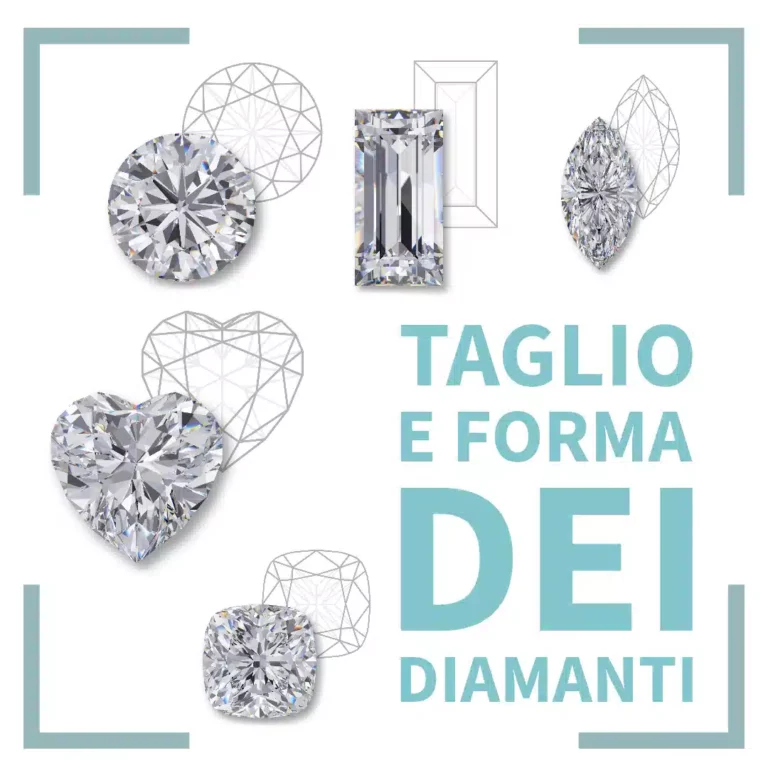


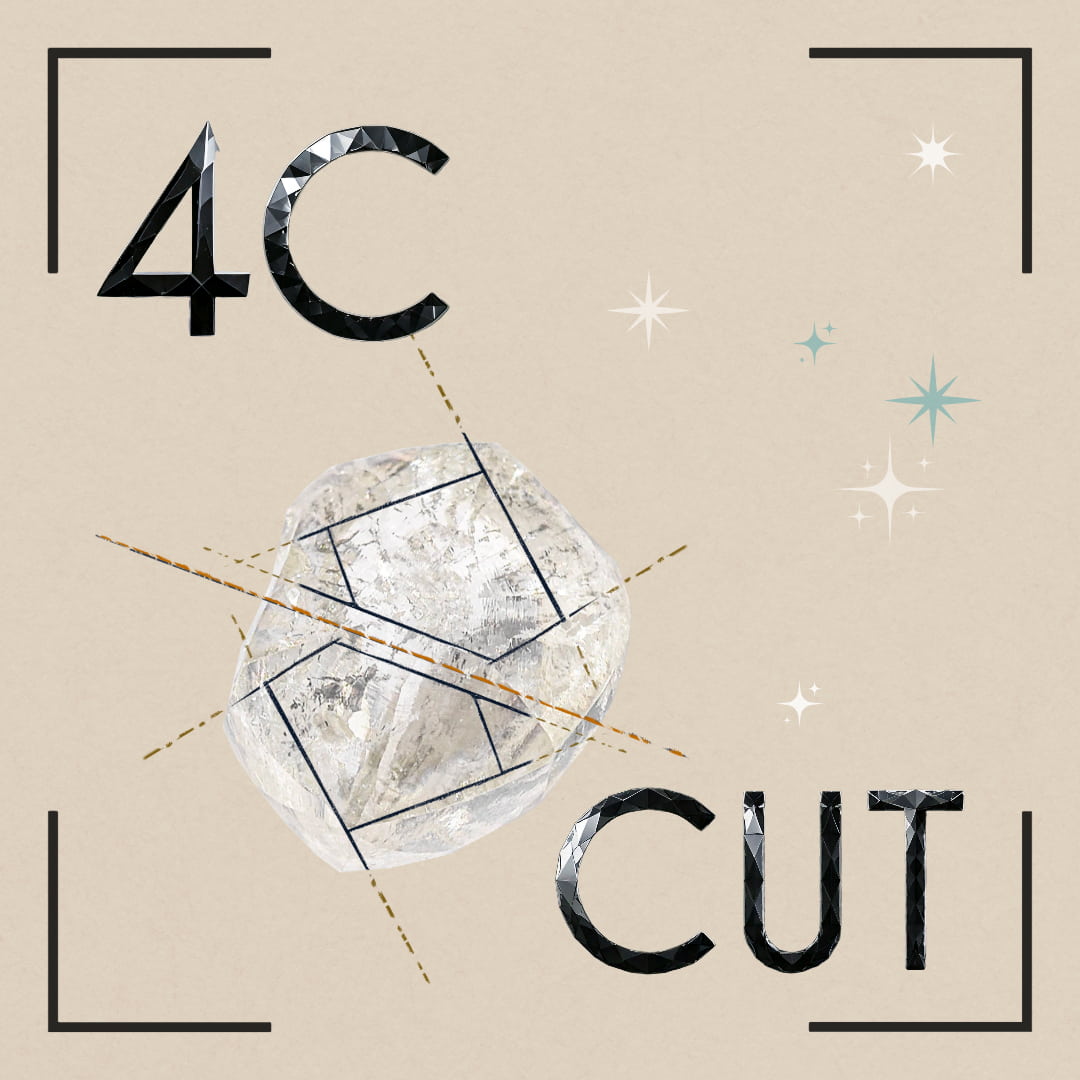
The cut of a diamond is one of the most important factors that determine the value and beauty of this stone.
Behind the extraordinary brilliance of a natural diamond lies a world of precision and geometry. Let's shed light on the most mystical of the 4Cs: the cut.
Natural diamonds exist to remind us of the miraculous power of nature: created deep within the Earth, subjected to extreme pressure and temperature, they form over millions of years when carbon crystallizes.
Diamonds are also the hardest substances on Earth and are characterized by exceptional brilliance and strength.
But it is often overlooked that the sparkle of a natural diamond is the result of an interaction between nature and the hand of man.
Of the 4Cs of diamond , color, carat and clarity depend on the Earth.
The cut, on the other hand, is the result of the precision work of an expert diamond cutter, who gives the diamond its final shape and enhances its sparkle.
But the cut, the factor that most contributes to the stone's brilliant appearance, is where human talent, experience, and a trained eye for beauty come into play.
What nature has created, only the most skilled craftsmen can enhance. So…
The answer is simple: brightness, a lot of sparkle and splendor. The scientific answer is: light (or scintillation), brilliance, and fire.
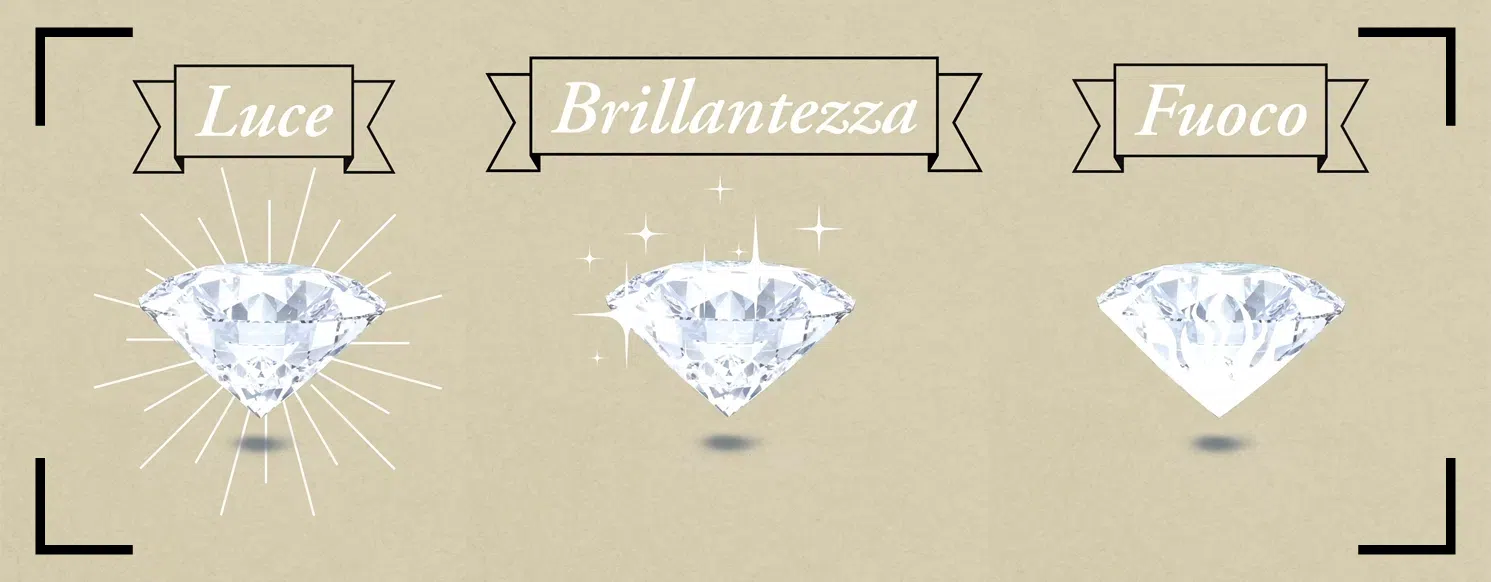
Sparkle : This is the combination of sparkle and light patterns. Sparkle manifests itself through points of light that flash when the diamond, or the light source, moves. Patterns are the contrast between the light and dark areas within the diamond.
Brilliance : This is the effect of all the white light reflections within the diamond, both internally and externally. The more brilliant the diamond, the higher its cut grade.
Fire : This is the color spectrum we observe in a diamond. It's all the flashes of colored light we see when we move a diamond back and forth under a direct light source.
A natural diamond must produce white light from its facets, which is brilliance; it must flash fire, which is the dispersion of rainbow-colored light; and it must create scintillation, that captivating play of light and dark when the stone moves.
The cut of a diamond is determined by symmetry, proportions, and polish and is the operation that allows a rough stone to be transformed into a faceted stone.
Often confused with the diamond's shape (e.g., round, pear, heart, etc.), cut refers to the way the stone's facets interact with light.
And the round-shaped diamond is the only one to receive an official cut grade from the IGI and GIA gemological laboratories.
A diamond's symmetry is the accuracy of its contours and shape, the placement and alignment of its facets.
The better the facets are cut, the more the diamond sparkles and shines.
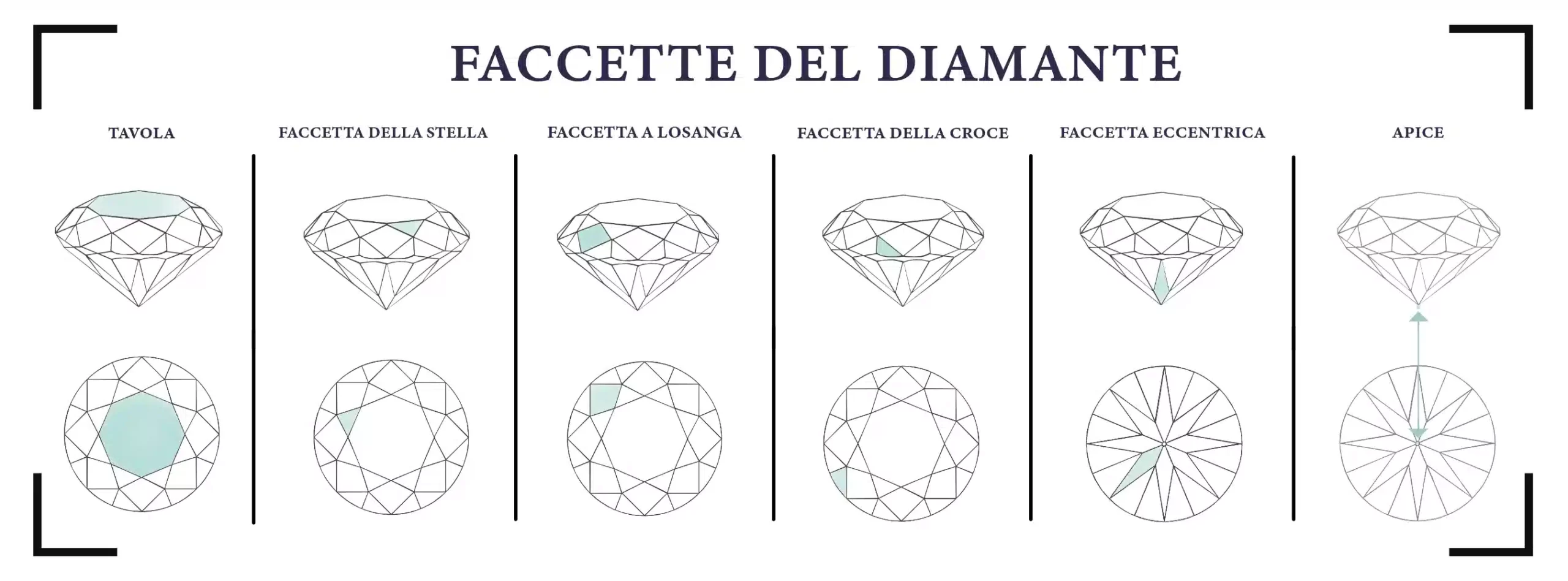
A small error in creating the facets can affect the beauty of the diamond.
For this reason, Fullcut Diamonds sells exclusively diamonds with Very Good and Excellent symmetry, whose cut grade is certified from the IGI, the Gemological Institute of Antwerp.
Diamond polish is the measure of how smooth and polished the surface of the diamond is.
Also in this case, Fullcut Diamonds only offers diamonds with Very Good and Excellent polish, certified by IGI Antwerp.
Below these grades it is in fact easy to notice surface imperfections which include the marks left by poor polishing.
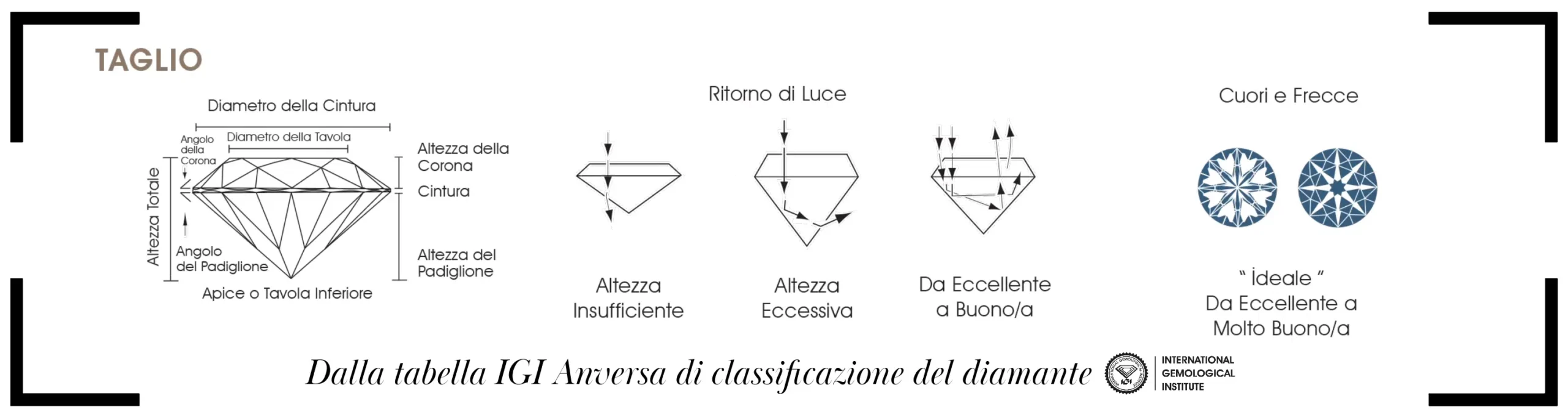
The proportions of a diamond represent the balance of the stone, where the height, diameter, angles and all its measurements correspond in the ideal cut, the one that gives the maximum possible brilliance, fire and scintillation.
Fullcut Diamonds sells only diamonds of ideal proportions.
The elements of the cut diamond are:
Table : This is the largest facet of the diamond, where most of the light enters and exits, creating the sparkle.
Crown : This is the upper portion of the diamond, extending from the table to the girdle.
Girdle : This is the plane separating the crown and pavilion of a diamond. It is used to measure the diameter of the diamond in millimeters.
Pavilion : It is the lower portion of the diamond, extending from the girdle to the apex.
Apex : This is the small facet at the end of the diamond, also called the tip. Not all diamonds have an apex. We can define the apex as a safety facet that protects the tip of the pavilion from chipping when the diamond is loose and during the setting process.
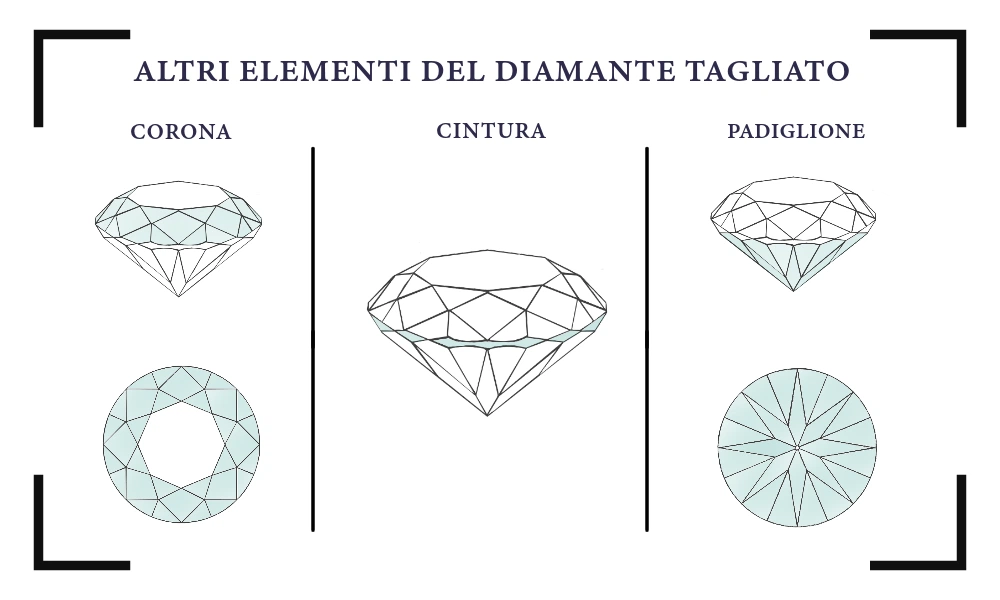
Table percentage : This figure shows how large the face of the diamond is, relative to its diameter. If it is too large, light will filter through the sides and the lower portion, causing the diamond to lose brilliance. If it is too small, it will let in less light, making the diamond appear darker.
Depth Percentage : This figure tells us how deep or shallow the diamond's cut is. A cut that's too deep results in wasted carat weight in the lower portion of the diamond, the part that isn't visible in the jewelry setting. A cut that's too shallow, on the other hand, will make the stone appear larger from above but will lose light due to poorly cut edges.
Girdle thickness : This indicates how thick or thin the girdle is. If it's too thin, the diamond will be more prone to chipping. If it's too thick, it means that carat points have been wasted in the center of the diamond, making it difficult to hold securely in the setting.
Crown Angle (for round-cut diamonds only): This ratio tells us the degree of slope of the diamond's crown. If it's too sloped, the stone will have plenty of fire but will appear dark. If it's too flat, the stone will have more brilliance but less sparkle and will appear flattened.
 How many diamond cut grades are there?
The cut grade incorporates all aspects of the diamond's appearance, design, and craftsmanship.
All the light and brilliance comes from the cut: for this reason it is important to choose a diamond in the highest grades (Excellent and Very Good) and understand why the cut takes precedence over the color, clarity and carat of the stone.
All natural diamonds for sale on Fullcut Diamonds have been certified by the IGI of Antwerp and are accompanied by a numbered certificate. Additionally, diamonds of 0.30 carats and above have the report number lasered into the girdle.
From best to worst, these are the diamond cut grades:
Excellent : Very brilliant, with a uniform pattern of dark and light areas. The facets are well-aligned and precise. This cut grade significantly affects the diamond's price.
Very Good : Being the cut grade closest to Excellent, it is impossible to distinguish them with the naked eye, due to their almost identical qualities, except for the slightly less uniform pattern between dark and light areas of the Very Good cut. However, it is fair to consider that by choosing this cut you will get a stone with excellent brilliance and quality at a lower price.
Good : The stone appears darker, may appear dull and have more shadowed areas.
Fair : has poorly shaped and poorly aligned facets that are dark and dull.
Poor : Dark areas are predominant, little shine and shimmer.
By company choice, Fullcut Diamonds sells exclusively diamonds in Excellent and Very Good cutsAlthough Good, Fair, and Poor cuts are cheaper, they are inferior to a well-cut stone. Therefore, we guarantee our customers not only that they are purchasing natural, ethically sourced, and IGI Antwerp-certified diamonds, but that they are also beautiful and of the highest quality.