
To help you through your natural diamond buying experience, here are the distinguishing features of the main characteristics that make these age-old stones so extraordinary.
Before purchasing diamond jewelry, it's a good idea to get a feel for the quality of your purchase, get clear answers, and perhaps try to dispel some common misconceptions about such a fascinating yet complex subject.
The answers to these questions are important to know what you want to buy, before you buy it.
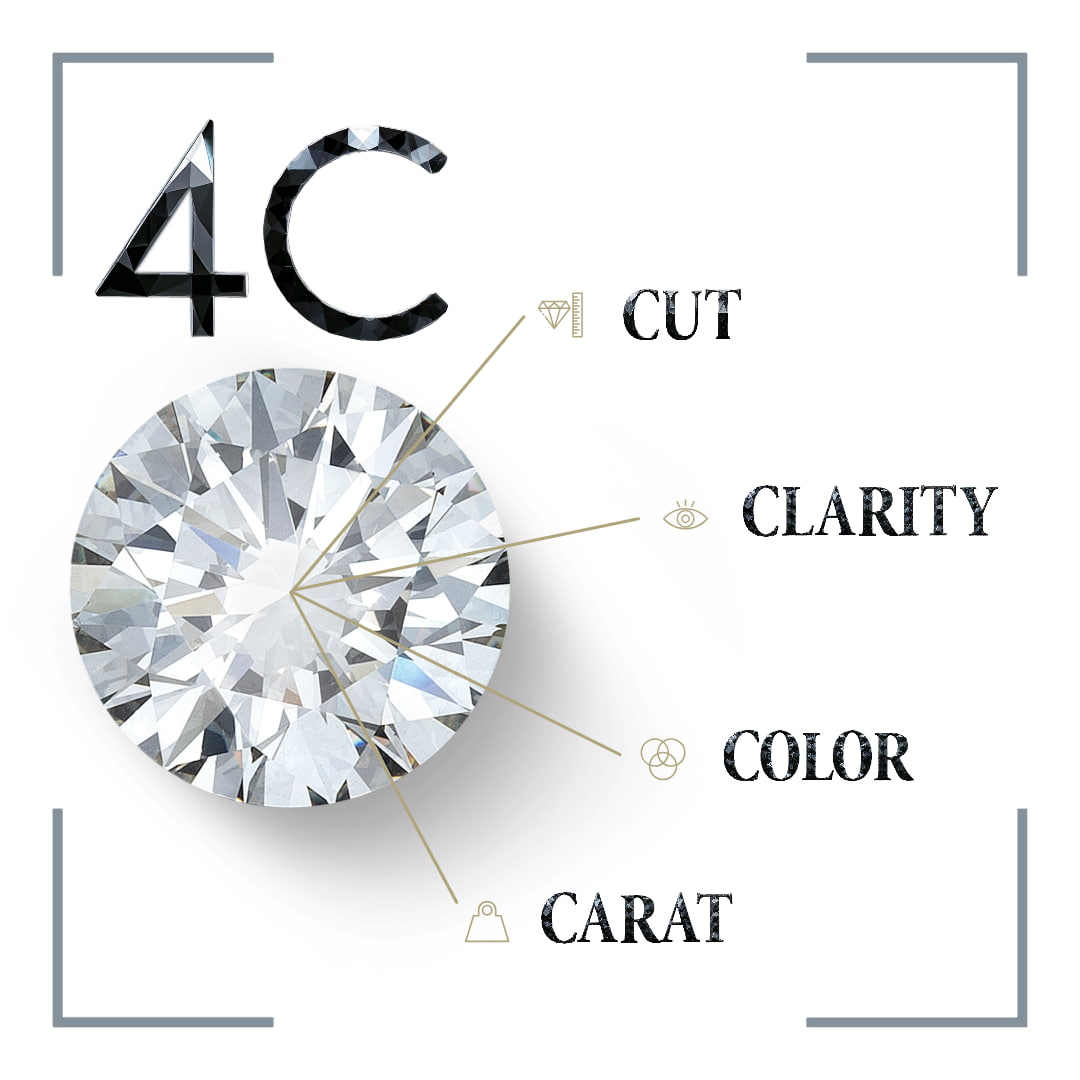
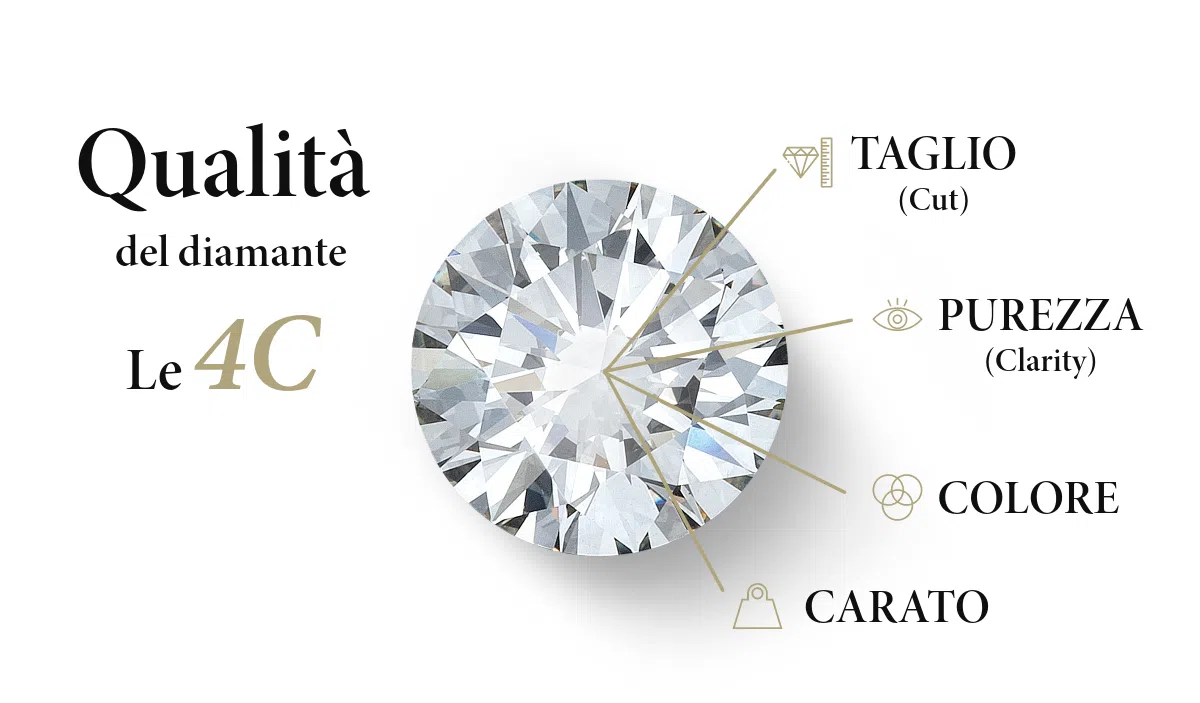
The 4 Cs of diamonds are the four fundamental characteristics that determine the value of a natural diamond and are cut, carats, clarity and colour.
The cut of a natural diamond is the deciding factor that determines how the stone interacts with light.
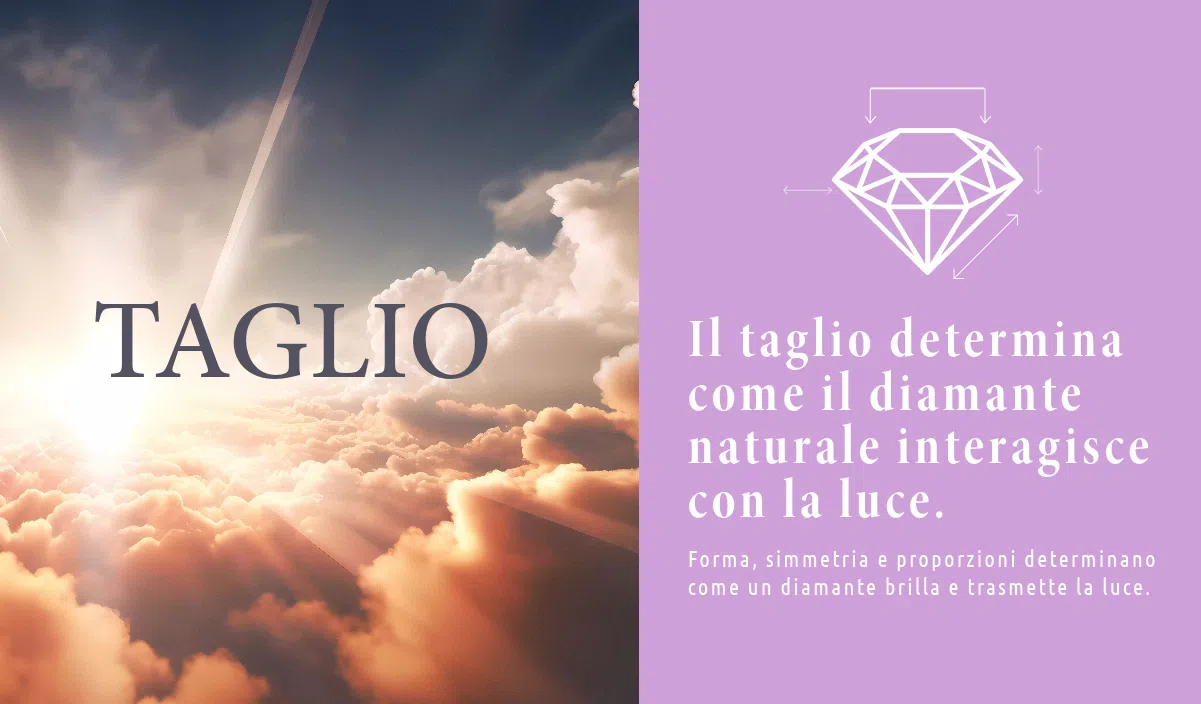
The Cut Grading System evaluates a diamond's appearance, including its brilliance, fire, and scintillation, which represent how a diamond reflects light, diffusing it into color, and how it sparkles.
To maximize its beauty, cutting a natural diamond requires great skill, art, and precision. This is why a diamond's cut grade also evaluates the stone based on the craftsmanship that went into the cutting process, namely the diamond's proportions, its polish, and its final symmetry.
So, the cut of the diamond always refers to its quality of workmanship and not to the shape of the stone.
Learn more about this topic in the article What is Diamond Cut Really?
Natural diamonds are formed deep within the Earth and, as a result, almost always exhibit unique features called inclusions or imperfections. Diamond clarity refers to the absence of these inclusions or imperfections.
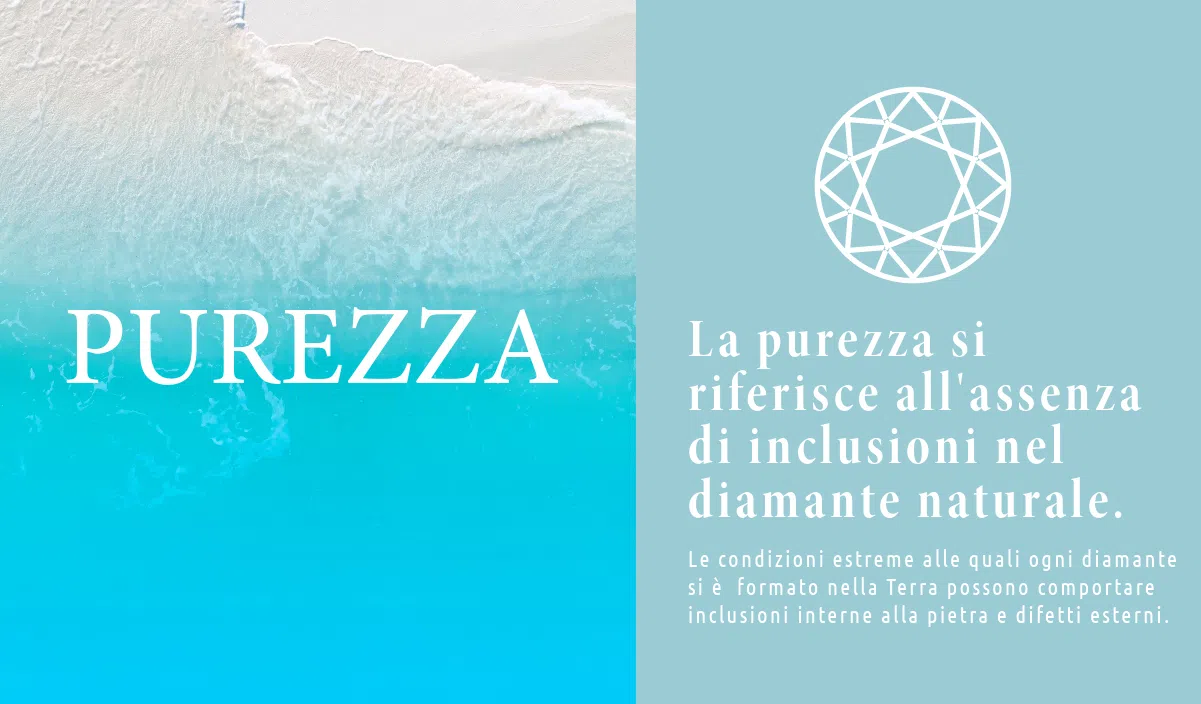
These common markings are usually the result of non-carbonaceous elements or disruptions due to the extreme temperature and pressure a diamond experiences during its formation in the bowels of the Earth: we can think of them as small time capsules that tell the story of the formation of natural diamonds.
Natural diamonds that form without inclusions are extremely rare and are considered "perfect" on most grading scales. These rare diamonds are some of the most valuable in the world.
Learn more about this topic by reading the article Diamond Clarity: What It Is and How It Affects Their Value.
The color grade of a natural diamond is usually a measure of how colorless the diamond is.
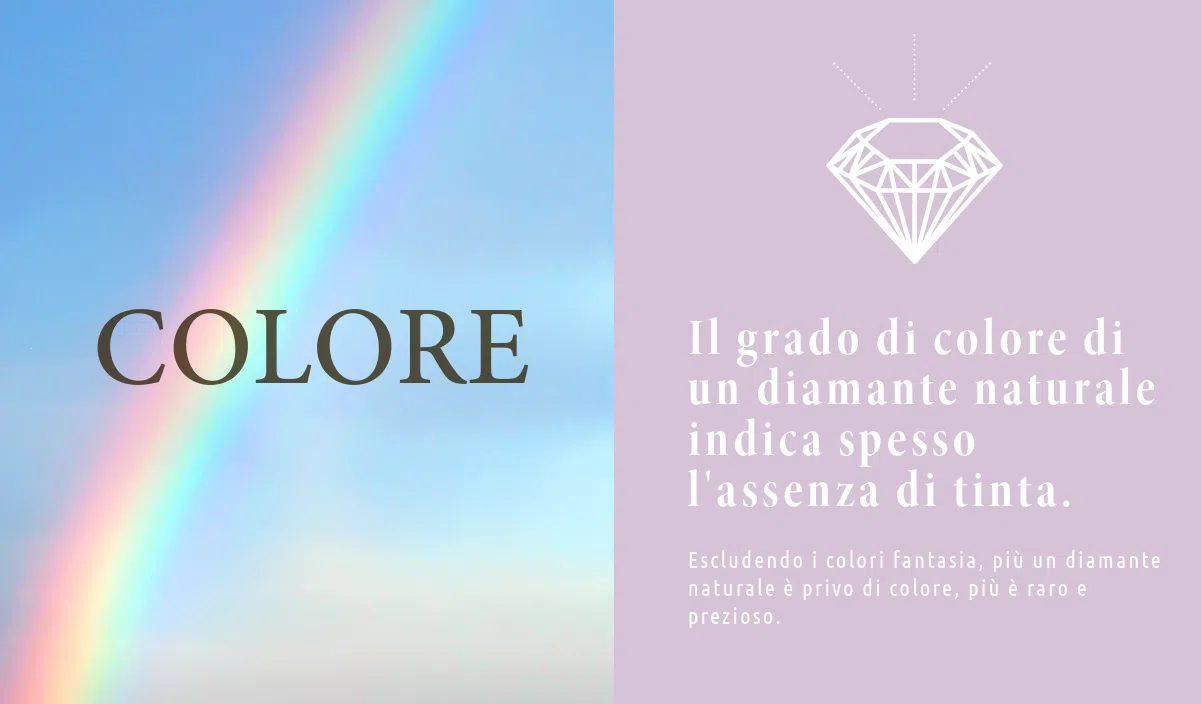
Most natural diamonds appear colorless to the average buyer, but actually have slight yellow or brown hues. The closer to colorless the diamond, the rarer and generally more valuable it is . Natural diamonds are graded on a color scale ranging from D (colorless) to Z (strongly brown or yellow).
Diamonds can naturally take on almost any color imaginable due to factors present in the Earth during their formation. Most of these fancy colors, or fancy, natural are so rare that their value can be enormous and are graded on a scale that more closely describes the visible color.
If you'd like to learn more about this fascinating aspect of diamonds, you can read the in-depth article What are the colors of diamonds?
The carat of a diamond is a measure of its weight, not its size.
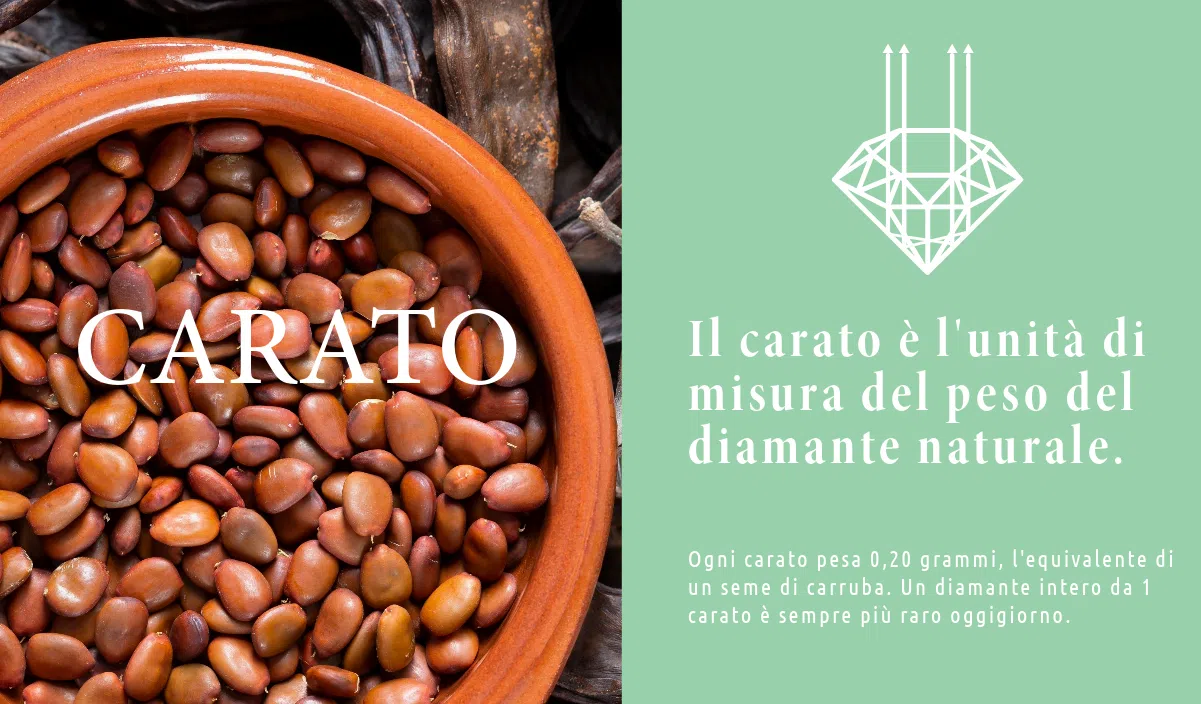
The carat derives its name from the carob seed.
Because each carob seed has an exceptionally uniform weight of 0.2 grams, this allowed for precise measurement of the weight of precious stones in the early gem trade. These seeds were in fact used as counterweights in scales before the metric carat was created as a universal measure.
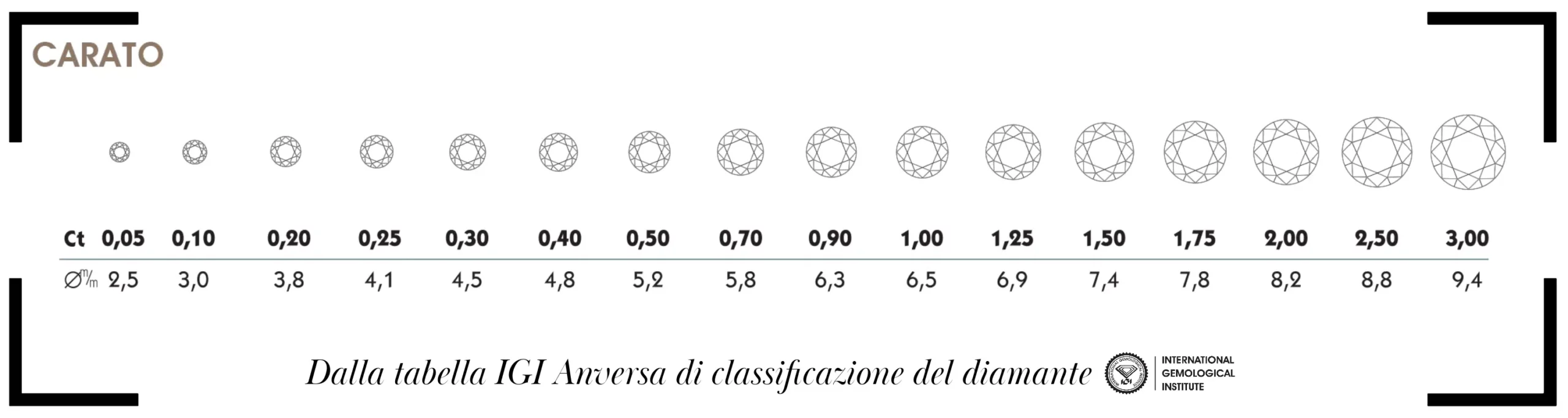
A 1-carat diamond weighs 200 milligrams, and natural 1-carat diamonds, as well as those of higher carat weight, are becoming rarer by the day, as the availability in nature continues to decrease and, in recent decades, there have been very few significant finds.
By the way, if you think size is the most important thing for your diamond, think again: learn more about this topic by reading the article: Diamond Carats: How Much Does Size Matter?